Event Ledgers & Data Layer Engineering

Event Ledgers and Storage Engines — Built for Peak Write Load

Get in touch
Event Ledgers & Data Layer Engineering illustration

A broker that drops, duplicates or reorders events turns every downstream system into a guess, and a database that stalls under write load takes the application with it. These failures appear at peak volume, when they are most expensive, and rarely in testing.

Obox Systems is an international software engineering company headquartered in the US, specializing in high-throughput systems built in Rust. Engagements are led by our CTO, backed by a structured team with mandatory peer review; NDA available on request.

Proven: an immutable ledger for a payment processing system, a bid queue and verifiable balances for a live-auction platform, and a decoupled RabbitMQ pipeline in a high-concurrency proxy system.

We can help you with:

  • Event ledgers — append-only, event-sourced records with deterministic ordering, replayable history and a verifiable audit trail
  • Streaming fabrics — Kafka, RabbitMQ and MQTT topologies with partition sizing, failover semantics and disk durability reviewed against your delivery guarantees
  • Idempotent processing — producers and consumers designed so retries and redelivery never duplicate effects
  • Data-layer diagnostics — write amplification, index bloat, lock contention and connection-pool exhaustion profiled under peak load
  • Persistence redesign — sharding, partitioning and log-structured layers where measurements show the current database is the bottleneck
  • Custom storage engines — purpose-built append-only logs or LSM-style persistence in Rust, only where a measured limit of existing engines justifies it
  • Local deployment — everything runs inside your own infrastructure, with no data leaving your perimeter
  • Full ownership — source code, benchmarks and runbooks stay yours

The Diagnostic Architecture Audit reviews your event pipeline and data layer under peak load in five days — a written plan you own.

Technologies we use

  • Rust
  • Apache Kafka
  • RabbitMQ
  • MQTT
  • PostgreSQL
  • Redis
  • AWS

Packages

Diagnostic Architecture Audit

Review of broker topology, partition sizing, failover and durability, plus data-layer profiling under peak load — write amplification, index bloat, lock contention — and a prioritized remediation roadmap

5 days

Rapid Technical Spike / PoC

A working prototype of one component — an ingestion pipeline, an event ledger or a storage layer — benchmarked on your event shapes against your current system

10–15 days

Dedicated Engineering Squad

A dedicated Obox team operating, partitioning and scaling your event brokers and data layer, with all code and IP staying yours

Monthly retainer

Core Modernization Sprint

Phased migration of a broker, ledger or persistence layer — parallel run, ordering and loss checks, and rollback at every milestone

Milestone-based

Case Studies

Payment Processing System project screenshot
Rust DevelopmentLow Latency Systems

Payment Processing System

United States3 months

A secure, scalable payment processing system in Rust and AWS, using DynamoDB, a two-step payment flow, and QLDB for an immutable, verifiable transaction ledger.

Live-Auction Platform project screenshot
SaaS Development

Live-Auction Platform

United States2 months

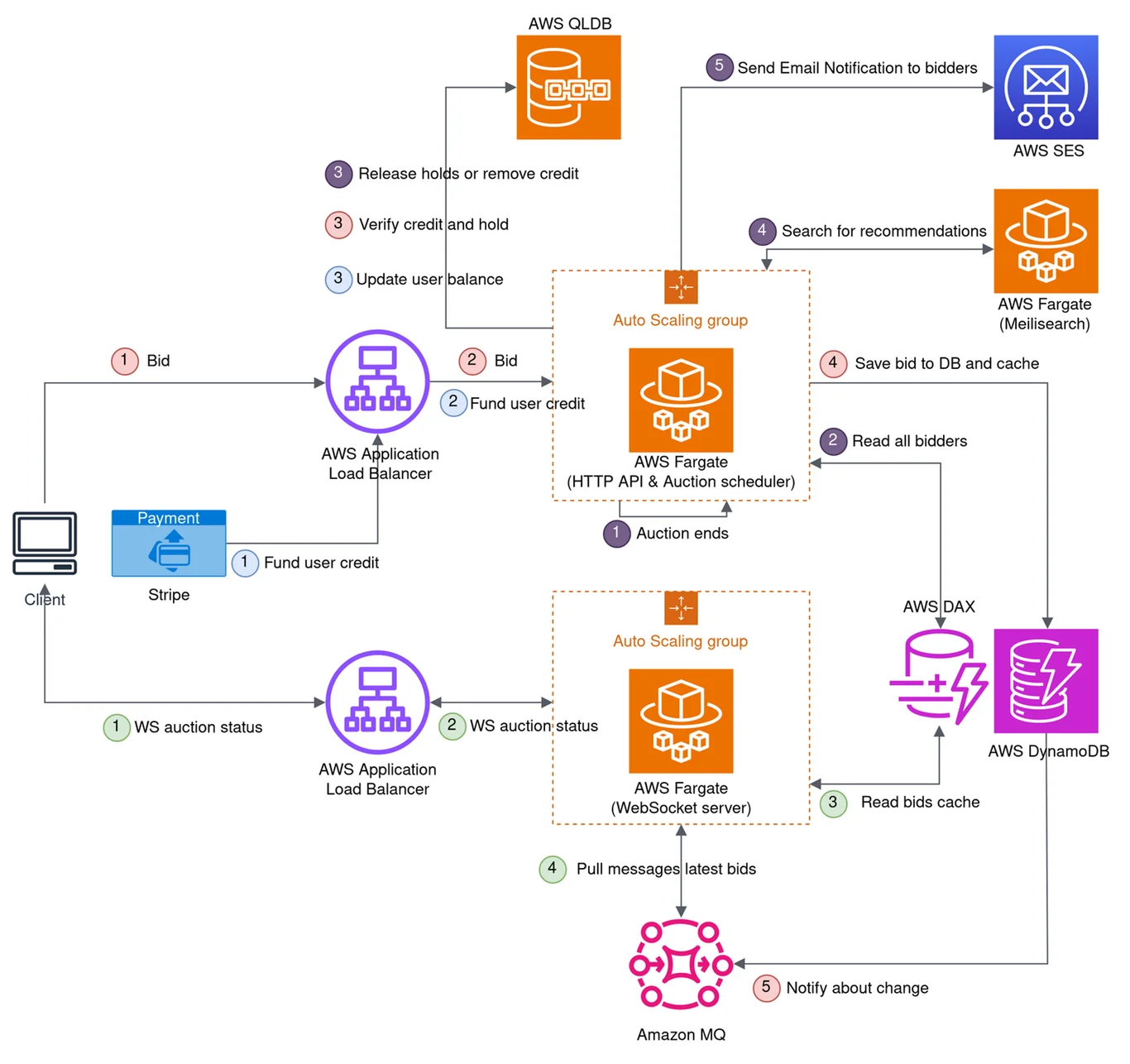
Delivered a scalable AWS-based live-auction backend in Rust with sub-500ms bid processing and 100% bid traceability, supporting online, hybrid, and offline auction formats.

High-Concurrency Proxy System project screenshot
Low Latency Systems

High-Concurrency Proxy System

United States4 months

A high-concurrency proxy platform in Rust handling 100,000+ simultaneous connections, with real-time management, automated abuse prevention, and Kubernetes-based auto-scaling.

FAQ

  • Broker clustering, partition sizing, failover semantics, disk durability and consumer idempotency, tested against your real event rates, so you learn where messages can be lost, duplicated or reordered before it happens in production.

  • By design and by test: replicated durable logs, ordering scoped per partition key, idempotent consumers and failure-injection tests. We state which guarantees hold and which do not, rather than promising exactly-once everywhere.

  • Events are only appended, never updated, corrections are compensating entries, and records are hash-linked so tampering is detectable. The full history can be replayed for auditors and for rebuilding state.

  • Rarely. We first profile your current engine under peak load. A custom engine is justified only when a measured limit remains, the workload is narrow, and you accept owning compaction, recovery and testing.

  • We profile write amplification, index bloat, lock contention and connection-pool use under peak load, then fix queries, indexes, partitioning or the persistence layer, in that order, measuring after each step.

  • AWS ended QLDB support on 31 July 2025 and recommends Amazon Aurora PostgreSQL. We migrate with hash-chain verification before and after the move and a parallel run before cutover, so history stays provably unchanged.

  • Yes. We deploy brokers, ledgers and storage layers inside your own environment, on bare metal or private cloud, so no data leaves your perimeter, which suits institutions with strict data-residency or regulatory requirements.

  • You own the code: IP, source, architecture docs and runbooks are assigned on completion. Contracts are fixed-scope per phase with Obox Systems LLC, a registered Wyoming company, starting with a 5-day audit.

Book a free call

Consult with our engineering team to define the perfect solution for your needs.

Book a call
30 minutes